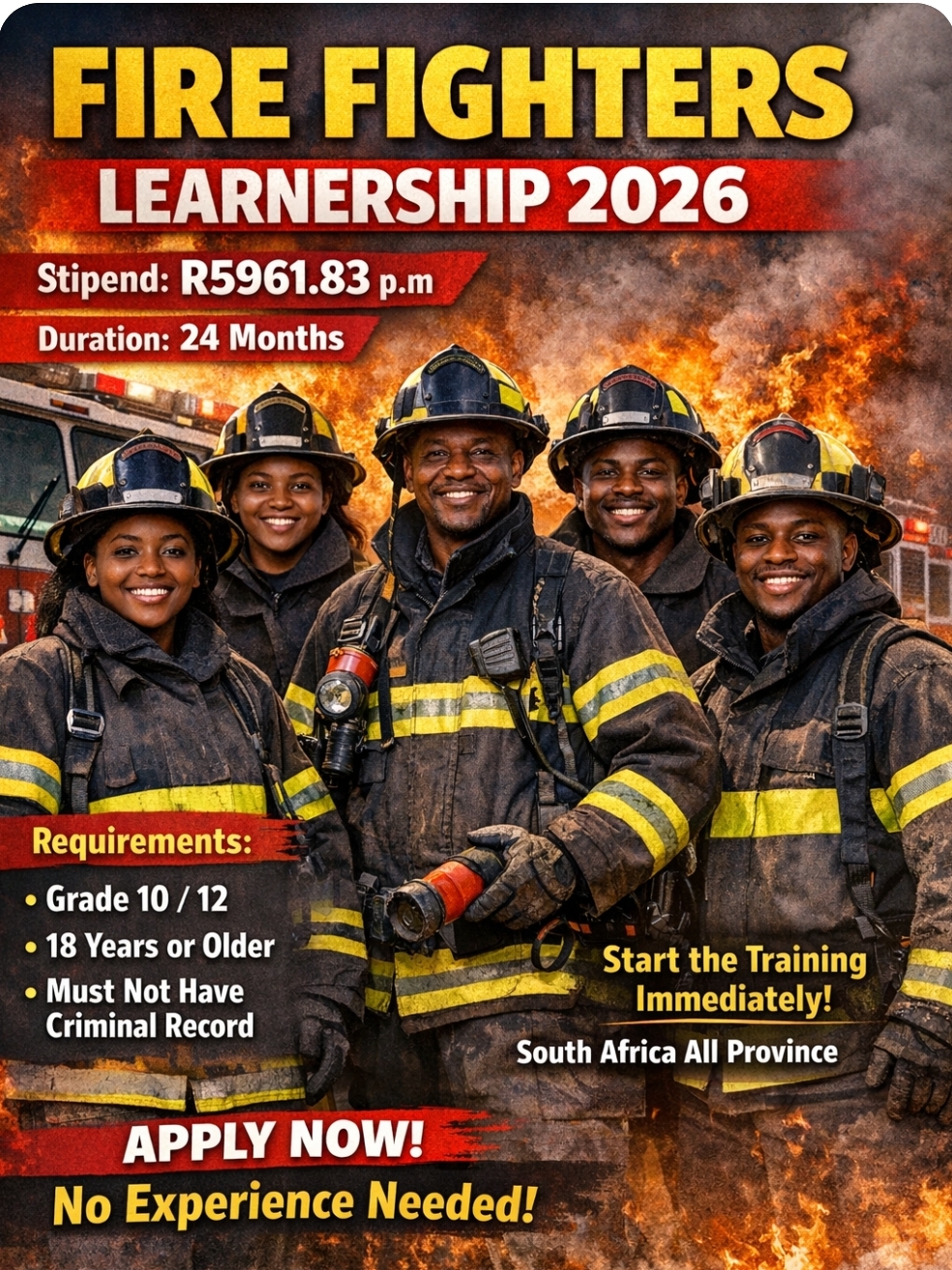
How to Apply for a Fire Fighter Learnership
A Complete Guide to Firefighter Learnerships and Hands-On Training
Introduction
Firefighting is more than a job – it is a calling that demands courage, discipline, physical strength, and a strong sense of responsibility toward the community. Fire fighters play a critical role in saving lives, protecting property, and responding to emergencies that range from fires and accidents to hazardous material incidents and natural disasters. Because of the high level of skill and preparedness required, becoming a professional fire fighter involves structured training, both theoretical and practical.
One of the most effective pathways into this career is through a Fire Fighter Learnership. A firefighter learnership combines classroom-based learning with real-world, hands-on training under the supervision of experienced professionals. In South Africa, large corporations, municipalities, and especially energy and industrial companies often offer firefighter learnership programmes to develop skilled emergency response personnel.
This article provides a detailed, step-by-step explanation of how to apply for a Fire Fighter Learnership, what the job involves, who qualifies, and what trainees can expect during the programme. If you are passionate about emergency response, public safety, and building a meaningful career, this guide will help you understand the journey ahead.
What Is a Fire Fighter Learnership?
A Fire Fighter Learnership is a structured training programme designed to equip candidates with the skills, knowledge, and experience required to work as a professional firefighter. It is registered with a relevant training authority and leads to a recognized qualification upon successful completion.
Unlike short courses or informal training, a learnership is regulated and follows a clear curriculum. Participants split their time between:
-
Theoretical learning (classroom instruction)
-
Practical training (hands-on firefighting and emergency response activities)
-
Workplace exposure (learning on-site at fire stations, industrial plants, or emergency units)
This combination ensures that learners not only understand firefighting concepts but can also apply them confidently in real-life situations.
Why Choose a Fire Fighter Learnership?
1. Practical Experience from Day One
Firefighting is a hands-on profession. Learnerships allow trainees to actively participate in drills, simulations, and real emergency response scenarios under supervision. This practical exposure builds confidence and competence.
2. Earn While You Learn
Many firefighter learnerships offer a stipend. While the amount may vary, it helps learners cover basic expenses while gaining valuable skills.
3. Industry-Recognized Qualification
On completion, learners receive a qualification that is recognized nationally. This qualification improves employability and opens doors to further training or permanent employment.
4. Career Opportunities
Graduates of firefighter learnerships often find employment with:
-
Municipal fire departments
-
Industrial and energy companies
-
Airports and harbours
-
Emergency medical services
-
Disaster management units
5. Personal Growth and Discipline
The training instills discipline, teamwork, leadership, and resilience—qualities that are valuable both professionally and personally.
Overview of the Fire Fighter Learnership Job Description
A Fire Fighter Learnership prepares candidates to perform a wide range of emergency response duties. During the programme, learners are trained to:
-
Respond quickly and effectively to fire incidents
-
Operate firefighting equipment such as hoses, pumps, ladders, and breathing apparatus
-
Perform rescue operations in dangerous environments
-
Assist with medical emergencies and first aid
-
Identify and manage hazardous materials
-
Conduct fire prevention inspections and safety awareness campaigns
-
Maintain firefighting equipment and protective gear
-
Work as part of a disciplined emergency response team
In industrial and energy-sector learnerships, trainees also learn about specialized risks, such as fuel fires, chemical hazards, and large-scale industrial incidents.
Fire Fighter Learnerships in the Energy and Industrial Sector
Leading energy corporations often operate in high-risk environments where fire safety is critical. These companies require highly trained emergency response teams to protect workers, infrastructure, and surrounding communities.
A Fire Fighter Learnership offered by an energy corporation in Johannesburg, for example, focuses on:
-
Industrial firefighting techniques
-
Hazardous materials handling
-
Emergency evacuation procedures
-
High-risk rescue operations
-
Compliance with safety regulations and standards
Learners benefit from mentorship by seasoned professionals who have years of experience in emergency response within complex industrial environments.
Minimum Requirements to Apply for a Fire Fighter Learnership
Although requirements may differ slightly between organizations, most Fire Fighter Learnerships share common entry criteria.
Educational Requirements
Applicants are usually required to have:
-
A National Senior Certificate (Grade 12 / Matric)
Some programmes may specify minimum subjects such as Mathematics or Physical Science, especially for technical environments.
Driver’s License
-
A valid Code B driver’s license is often mandatory
-
Some employers may later require learners to upgrade to Code C1 or Code C
Age Requirements
-
Typically between 18 and 35 years (though this may vary)
Physical Fitness
Firefighting is physically demanding. Applicants must:
-
Be medically fit
-
Have good physical endurance and strength
-
Be able to work under pressure and in challenging conditions
Other Key Attributes
Successful candidates often demonstrate:
-
Strong teamwork skills
-
Discipline and reliability
-
Willingness to learn
-
Ability to follow instructions
-
Good communication skills
Skills and Qualities Needed to Succeed as a Fire Fighter
Physical Strength and Stamina
Fire fighters carry heavy equipment, climb ladders, and work in extreme conditions. Physical fitness is essential.
Mental Toughness
Emergency situations can be stressful and unpredictable. Firefighters must remain calm, focused, and decisive.
Teamwork
Firefighting is never a solo task. Every operation relies on cooperation and trust within the team.
Problem-Solving Skills
Each emergency is different. Firefighters must assess situations quickly and choose the safest and most effective response.
Commitment to Safety
Safety procedures exist to protect both firefighters and the public. A strong safety mindset is critical.
What Does Hands-On Training Involve?
Hands-on training is the core of a Fire Fighter Learnership. It transforms theoretical knowledge into practical ability.
Fire Suppression Training
Learners practice:
-
Using different types of fire extinguishers
-
Handling fire hoses and pumps
-
Controlling structural, vehicle, and industrial fires
Rescue Operations
Training includes:
-
Search and rescue techniques
-
Vehicle extrication
-
High-angle and confined space rescues
Breathing Apparatus and Protective Gear
Learners are trained to:
-
Use self-contained breathing apparatus (SCBA)
-
Wear and maintain protective clothing
-
Operate safely in smoke-filled environments
Emergency Medical Response
Basic emergency care training often covers:
-
First aid
-
CPR
-
Stabilizing injured victims before medical professionals arrive
Drills and Simulations
Regular drills simulate real emergencies, helping learners develop confidence and teamwork under pressure.
Theoretical Training Component
The classroom-based portion of the learnership focuses on understanding the science, rules, and principles behind firefighting.
Topics may include:
-
Fire behavior and combustion
-
Fire prevention strategies
-
Safety legislation and regulations
-
Risk assessment
-
Incident command systems
-
Hazardous materials awareness
This theoretical knowledge supports safe and effective decision-making in real-life situations.
Step-by-Step Guide: How to Apply for a Fire Fighter Learnership
Step 1: Look for Official Advertisements
Fire Fighter Learnerships are usually advertised through:
-
Company websites
-
Municipal websites
-
Government portals
-
Newspapers
-
Social media pages of organizations
Always ensure the advertisement is legitimate.
Step 2: Check the Requirements Carefully
Before applying, confirm that you meet:
-
Educational requirements
-
License requirements
-
Age and fitness criteria
Applying without meeting the minimum requirements may result in automatic disqualification.
Step 3: Prepare Your Documents
Commonly required documents include:
-
Certified copy of your ID
-
Certified copy of your Matric certificate
-
Certified copy of your driver’s license
-
Updated CV
-
Proof of residence (if required)
Step 4: Complete the Application
Follow the instructions exactly. Applications may be submitted:
-
Online via a website or email
-
Physically at a specified location
Incomplete applications are often rejected.
Step 5: Assessment and Selection Process
Shortlisted candidates may undergo:
-
Physical fitness assessments
-
Medical evaluations
-
Psychometric tests
-
Interviews
Step 6: Acceptance and Enrollment
Successful applicants are formally enrolled in the learnership and begin their training according to the programme schedule.
Tips to Improve Your Chances of Being Selected
-
Maintain good physical fitness before applying
-
Gain basic first aid training if possible
-
Keep your driver’s license valid and up to date
-
Ensure your CV is neat, honest, and well-structured
-
Follow all application instructions carefully
Career Opportunities After Completing a Fire Fighter Learnership
Completing a Fire Fighter Learnership opens multiple career paths, including:
-
Firefighter in municipal fire services
-
Industrial fire and safety officer
-
Emergency response technician
-
Disaster management personnel
-
Safety and risk control officer
Some learners may also continue with advanced training to specialize in areas such as hazardous materials, fire investigation, or emergency management.
Challenges of the Firefighting Profession
While rewarding, firefighting is not easy. Challenges include:
-
Long and irregular working hours
-
Exposure to dangerous environments
-
Physical and emotional stress
-
High responsibility for public safety
However, many firefighters find the sense of purpose and community service deeply fulfilling.
Conclusion
A Fire Fighter Learnership is an excellent opportunity for individuals who are passionate about saving lives, protecting communities, and building a respected career in emergency services. Through a combination of theoretical education, hands-on training, and workplace exposure, learners gain the skills needed to operate confidently in high-pressure situations.
For candidates in Johannesburg and across South Africa, learnerships offered by energy corporations and other organizations provide a solid foundation for long-term employment and professional growth. By meeting the requirements, preparing thoroughly, and committing to the demanding training process, aspiring firefighters can turn their ambition into a meaningful and impactful career.
If you are determined, disciplined, and ready to serve, a Fire Fighter Learnership may be the first step toward becoming a trusted protector in your community.