EPWP Data Capturers Opportunity 2026: A Complete Guide to the Role, Requirements, Duties, Skills and Career Growth
The search for employment opportunities can be challenging for many people, especially young job seekers and individuals who want to gain practical workplace experience. Programmes that create work opportunities and skills development can play an important role in helping people build careers and improve their future prospects. One such programme that continues to create employment opportunities across South Africa is the Expanded Public Works Programme, commonly known as EPWP.
The EPWP Data Capturer opportunity provides candidates with a chance to gain practical experience while contributing to important public projects and administrative functions. Data capturers are responsible for collecting, organising, recording and maintaining information that supports project management and service delivery activities.
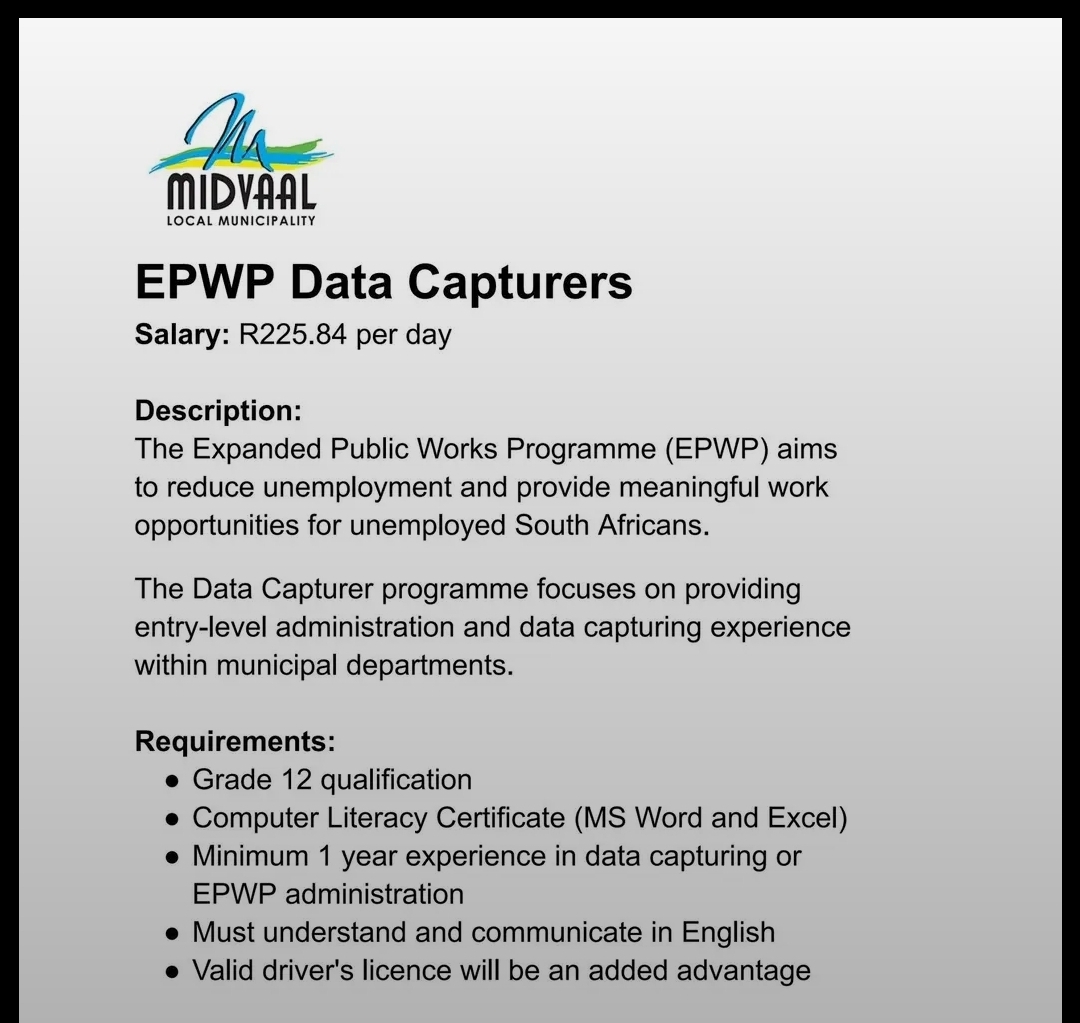
The advertised opportunity offers a daily salary of R225.84 and requires applicants to have a Grade 12 qualification, computer literacy and relevant experience. Although some people may only see data capturing as basic administrative work, the position can become an important stepping stone into broader careers in administration, office support, project coordination and information management.
Understanding the Expanded Public Works Programme
The Expanded Public Works Programme was introduced as a government initiative aimed at reducing unemployment and providing work opportunities to people who may struggle to enter the labour market. Through temporary employment and skills development activities, participants can gain experience that may improve their future employability.
The programme often operates across different sectors such as:
• Infrastructure
• Public safety
• Community services
• Environmental projects
• Administration and support services
Each project requires accurate record keeping and proper administration. This creates the need for data capturers who help ensure that information is properly collected and managed.
Without organised records, projects can face delays, reporting problems and communication difficulties. Data capturers therefore play a valuable role in keeping operations running effectively.
What Is a Data Capturer?
A data capturer is a person responsible for entering, recording and maintaining information using computer systems or databases. The role requires accuracy, attention to detail and the ability to work with information efficiently.
The information handled by data capturers may include:
• Employee records
• Attendance information
• Project details
• Financial information
• Administrative documents
• Reporting data
• Beneficiary information
• Daily operational records
A data capturer works with information that supports decision-making processes and administrative systems.
Main Duties and Responsibilities
Although specific responsibilities can vary depending on project needs, the role often includes the following tasks:
Capturing information
One of the primary responsibilities involves entering information into computer systems accurately.
This may include:
• Recording participant details
• Updating files
• Capturing reports
• Processing project information
• Updating databases
Accuracy is essential because mistakes can affect planning and reporting.
Verifying information
Data capturers must check whether information is correct before entering it into systems.
This can include checking:
• Names
• Identification details
• Dates
• Contact information
• Project records
Verification helps reduce errors and improve reliability.
Maintaining records
Organising records properly ensures that information can be accessed whenever needed.
Responsibilities may involve:
• Filing documents
• Maintaining electronic folders
• Updating records
• Archiving information
Supporting administration activities
Data capturers often assist with additional office tasks.
These tasks may include:
• Printing reports
• Preparing documents
• Assisting with correspondence
• Supporting supervisors
• Updating spreadsheets
Producing reports
Managers and project coordinators often require reports for planning purposes.
Data capturers may help prepare:
• Daily reports
• Weekly summaries
• Monthly records
• Statistical information
Requirements Explained
Grade 12 qualification
A Grade 12 certificate provides a basic educational foundation that helps candidates understand workplace communication, administration and reporting tasks.
Matric subjects often help candidates develop:
• Reading skills
• Writing skills
• Numerical understanding
• Communication abilities
Computer literacy certificate
Modern workplaces depend heavily on technology.
Computer literacy helps candidates understand:
• Microsoft Word
• Microsoft Excel
• Basic computer operations
• File management
• Digital communication systems
Word and Excel remain important tools in administration because they are widely used in offices.
Minimum one year experience
Experience in data capturing or EPWP administration can be valuable because it shows familiarity with administrative systems.
Candidates with previous experience may already understand:
• Office procedures
• Record management
• Data processing
• Reporting methods
Experience can reduce training time and improve productivity.
Communication skills
The ability to communicate effectively in English is important because workplace communication often involves:
• Reports
• Emails
• Instructions
• Meetings
• Administrative documents
Strong communication improves teamwork and reduces misunderstandings.
Driver’s licence advantage
Although a driver’s licence is listed as an added advantage rather than a requirement, it may increase flexibility.
Employees with licences may occasionally assist with:
• Delivering documents
• Travelling between project sites
• Supporting operational activities
Skills That Can Help Candidates Succeed
Attention to detail
Small errors can create major problems in administrative work.
Strong attention to detail helps candidates:
• Identify mistakes
• Maintain accuracy
• Improve quality
Time management
Deadlines are common in administrative environments.
Time management helps employees:
• Complete tasks efficiently
• Meet reporting deadlines
• Organise workloads
Organisation skills
Data capturers often work with large amounts of information.
Organisation skills help with:
• Sorting records
• Maintaining files
• Tracking information
Teamwork
Workplaces require cooperation between employees and departments.
Teamwork supports:
• Better communication
• Faster problem solving
• Positive work environments
Benefits of Working as an EPWP Data Capturer
Many people focus only on the salary when considering opportunities, but work experience can provide long-term value.
Benefits may include:
Workplace experience
Experience often increases confidence and improves future employment opportunities.
Skills development
Participants can develop:
• Administrative abilities
• Communication skills
• Technical knowledge
• Computer experience
Networking opportunities
Employees often meet professionals who may assist with future career growth.
Improved employability
Future employers frequently value practical experience.
Career Opportunities After Data Capturing
A data capturing position can open pathways into other occupations such as:
• Administrative clerk
• Office assistant
• Project administrator
• Records officer
• Receptionist
• Data analyst assistant
• Human resources assistant
• Information officer
Skills gained in one role can become useful in many industries.
Tips for Applicants
Candidates preparing applications should consider the following:
Read all instructions carefully
Missing information may affect applications.
Prepare documents early
Applicants may need:
• Identity document
• Grade 12 certificate
• Computer literacy certificate
• Updated CV
• Supporting documents
Update contact details
Employers must be able to contact shortlisted candidates.
Review your CV
Check for:
• Spelling mistakes
• Missing information
• Incorrect dates
Final Thoughts
The EPWP Data Capturer opportunity can become much more than temporary work. It can serve as an important starting point for individuals who want experience, practical skills and exposure to a structured working environment.
Administrative skills remain valuable in both public and private sectors. People who work hard, continue learning and develop their abilities can use such opportunities as building blocks for future success.
Every workplace experience adds something useful to a person’s professional journey. For motivated individuals who meet the requirements, opportunities like these can provide experience that may open doors to greater career possibilities in the future.