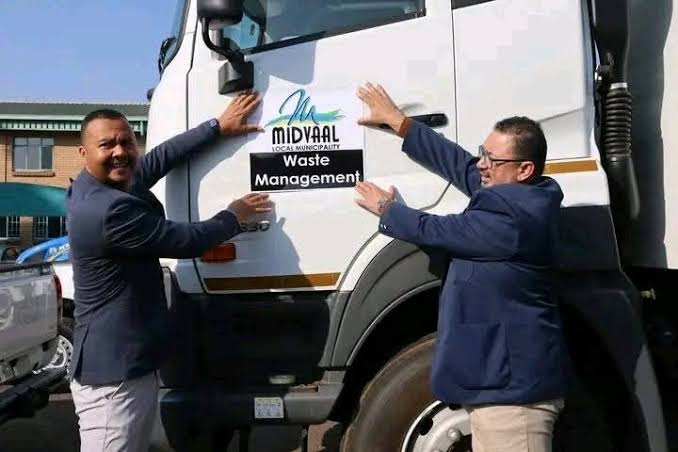
Career as a Landfill and Transfer Station Truck Driver
In the vital machinery of local government, often unseen but indispensable, are the individuals who ensure our communities remain clean and healthy. Among these unsung heroes is the Truck Driver specializing in landfill and transfer station operations. This isn’t just about moving waste; it’s about upholding public health, environmental responsibility, and the efficient functioning of urban and rural landscapes.
A recent opening at the Midvaal Local Municipality in Meyerton, South Africa, for a Code C1 Truck Driver (identified by the internal code X01 and reference MN3940/25), spotlights the multifaceted nature of this role. While the core duty involves operating heavy vehicles, the responsibilities extend far beyond, encompassing meticulous planning, stringent safety adherence, detailed record-keeping, and a commitment to broader community service.
The Foundation: What it Takes to Get Behind the Wheel
Becoming a professional driver in this specialized field requires a specific blend of formal qualifications and inherent personal attributes. For the Midvaal position, a Grade 10 certificate serves as the baseline educational requirement, with a Grade 12 certificate being a distinct advantage. This suggests that while practical skills are paramount, a solid educational foundation is increasingly valued in municipal roles.
Crucially, the successful candidate must possess a Code C1 (10) Driver’s License coupled with a Public Driver’s Permit (PDP). The PDP is not merely a formality; it signifies that the driver has met additional legal requirements to transport goods or passengers for a fee, highlighting the professional nature and responsibility associated with this type of driving.
Beyond the formal qualifications, a robust set of communication and interpersonal skills is essential. Truck drivers, especially those interacting with transfer station personnel, landfill staff, or even community members, need to convey information clearly and collaborate effectively. This goes hand-in-hand with core vocational competencies such as adaptability, the ability to solve problems as they arise on the road or at facilities, and a keen attention to detail. These qualities ensure not only efficient operation but also the swift resolution of any unforeseen challenges.
Moreover, the demanding nature of the work calls for a hard-working and self-disciplined individual. The job is not always glamorous, often involving physically demanding tasks and adherence to strict schedules. Two years of relevant driving experience, particularly within a Local Government Authority, is a significant prerequisite. This emphasizes the value of understanding municipal protocols, routes, and the unique challenges associated with public sector waste management.
The Daily Grind: More Than Just Driving
The daily life of a landfill and transfer station truck driver is far from monotonous. While the central task is driving a truck, the responsibilities are deeply integrated with the overall waste management process. This involves the loading and off-loading of various materials, ensuring the section’s productivity and contributing directly to effective service delivery for the community.
Strategic planning is a key component of the role. Drivers aren’t just given a destination; they must plan their daily tasks and navigate from one location to the next based on instructions or work orders from their Foreman or Supervisor. This often involves optimizing routes to maximize efficiency and minimize fuel consumption.
Environmental stewardship is a critical aspect of the job. A paramount duty is to ensure the waste is securely contained and covered to prevent any spillage or hazards during transit. This commitment extends to meticulously verifying that waste is transported only to legally authorized facilities, preventing illegal dumping and safeguarding the environment. Drivers are also tasked with taking all reasonable steps to prevent any spillage of waste or littering from their vehicle during collection and transport, reinforcing their role as environmental protectors.
Safety is non-negotiable. Truck drivers must follow all municipal safety policies and procedures, including the consistent use of appropriate Personal Protective Equipment (PPE). Furthermore, strict adherence to all national and local traffic laws and regulations in South Africa is not just about personal safety but also about protecting other road users and maintaining the municipality’s reputation.
Beyond the Wheel: Administrative and Support Functions
The role of a truck driver in this context extends into crucial administrative duties. Maintaining accurate logs is a significant part of the daily routine, encompassing details such as collected waste volumes, completed mileage, fuel consumption, and any incidents or issues encountered. These logs are vital for operational analysis, budget management, and compliance reporting.
Effective communication is another essential skill. Drivers must be able to communicate clearly with supervisors, team members, and even members of the public regarding any delays or issues in collection schedules. This transparency helps manage expectations and maintain public trust.
Proactive maintenance is also a core responsibility. Drivers are expected to promptly report any mechanical issues, malfunctions, or damage to their vehicle or specialized equipment to the supervisor or maintenance department. This foresight prevents minor issues from escalating into major breakdowns, ensuring vehicle longevity and operational continuity. Daily pre-trip and post-trip inspections are mandatory, serving as the first line of defense against potential mechanical failures.
Finally, the role demands flexibility and a willingness to contribute beyond the immediate scope of driving. When there’s no driving work, individuals are expected to assist in other tasks within the sub-section to ensure effective service delivery. This speaks to the collaborative nature of municipal work and the expectation that all employees contribute to the broader mission. Additionally, performing any other ad hoc tasks as requested by management underscores the need for adaptability and a “can-do” attitude.
Remuneration and Benefits: A Rewarding Career
The Midvaal Local Municipality offers a competitive compensation package for this critical role. The basic annual salary ranges from R 210,060.00 to R 236,256.00, aligning with Level 10 of a Grade 04 Local Authority. However, the total package, inclusive of all benefits, reaches an impressive R 356,532.96 per annum. This comprehensive package highlights the municipality’s commitment to attracting and retaining skilled professionals for essential services.
Equity, Inclusivity, and the Application Process
The Midvaal Local Municipality is dedicated to fostering a diverse and inclusive workforce. The job advertisement explicitly encourages persons with disabilities to apply, demonstrating a commitment to creating equitable opportunities. Furthermore, preference will be given to applicants that promote representativeness in terms of Employment Equity targets, actively seeking to address historical imbalances in the workforce based on race, gender, and disability.
The application process is clearly outlined, with a strict closing date of July 7, 2025, at 12:00. Applicants are instructed to apply via the Midvaal Local Municipality website, www.midvaal.gov.za. Incomplete, unclear, or illegible CVs, or applications without CVs, will be disqualified, emphasizing the need for meticulous application preparation.
For any queries, the Human Resources department provides multiple contact numbers (016) 360-7435, 7557, 7569, 7432. The municipality also outlines its commitment to privacy under the Protection of Personal Information Act (POPIA), ensuring that personal information is handled responsibly.
Candidates should be aware that all shortlisted applicants will undergo background screening checks, including verification of qualifications, criminal record checks, and security vetting. For those with foreign qualifications, a letter from SAQA (South African Qualifications Authority) confirming the equivalence of their qualifications is mandatory.
While the municipality aims to process applications efficiently, due to the anticipated high volume, applicants are advised that responses may not be immediate. If no response is received within three months, it should be assumed that the application was unsuccessful. It is also important to note that the Council reserves the right not to make an appointment to the position.
Interestingly, the municipality also outlines a policy for reimbursing travel costs for interviews or assessments for candidates traveling over 400km, specifically for positions on levels 1 to 4. While this particular position is a Level 10, it indicates the municipality’s consideration for candidates from a wider geographical area for certain roles.
A Career with Impact
The role of a Landfill and Transfer Station Truck Driver is more than just a job; it’s a critical component of municipal operations that directly impacts the health and well-being of a community. It offers a stable career path with competitive remuneration and the satisfaction of contributing to essential public services. For those with the right skills, experience, and dedication, this position presents a genuine opportunity to be a driving force in building a cleaner, healthier, and more sustainable future for Meyerton and the broader Midvaal region.