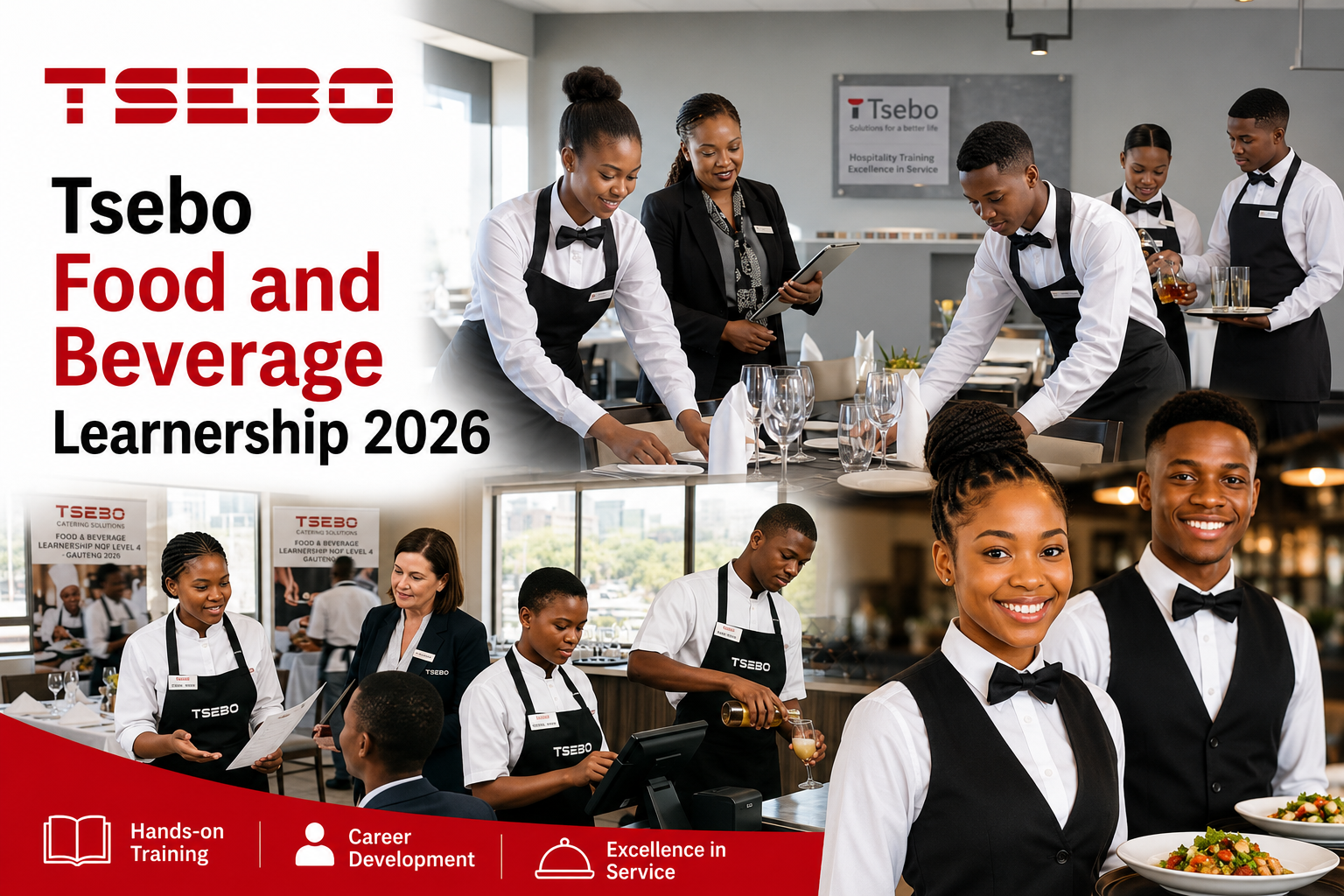
Tsebo Food and Beverage Learnership 2026 (Gauteng): Complete Guide to Requirements, Benefits, Training, Skills Development and Application Process
Introduction
The hospitality industry remains one of the largest employers worldwide, creating opportunities for individuals who are passionate about customer service, food preparation, dining experiences, and hospitality operations. In South Africa, the hospitality and catering sectors continue to provide employment opportunities for young people seeking workplace experience and industry-recognized qualifications.
One of the exciting opportunities available in 2026 is the Tsebo Food and Beverage Learnership Programme in Gauteng. This learnership has been developed to provide unemployed South African youth with practical workplace exposure and theoretical training within the food and beverage industry. The programme combines structured learning with hands-on workplace experience, allowing participants to gain valuable industry knowledge while developing skills that can support future career growth.
The learnership is offered through Tsebo Catering Solutions, a division of Tsebo Solutions Group, one of Africa’s leading workplace management and support services providers. Through this programme, successful candidates will work toward a nationally recognized qualification at NQF Level 4 while gaining exposure to real working environments within the hospitality industry.
This guide explains everything prospective applicants need to know about the learnership, including eligibility requirements, benefits, training modules, career opportunities, skills development, application guidance, and tips for success.
Understanding the Food and Beverage Industry
The food and beverage sector forms a major component of the hospitality industry. It includes businesses and organizations responsible for preparing, serving, and managing food and drinks for customers.
The sector covers a wide variety of establishments, including:
- Restaurants
- Hotels
- Lodges
- Resorts
- Catering companies
- Conference centers
- Event venues
- Corporate dining facilities
- Healthcare catering services
- Educational institution cafeterias
- Hospitality service providers
Professionals working in this industry play an important role in ensuring customer satisfaction through quality service, food safety, hygiene, and professional interaction.
The industry requires individuals who are organized, customer-focused, adaptable, and capable of working under pressure while maintaining high service standards.
About Tsebo Solutions Group
Tsebo Solutions Group is recognized as one of Africa’s leading integrated workplace management providers. The company offers a broad range of services designed to help organizations improve operational efficiency while reducing costs and complexities.
The company provides services in several sectors, including:
- Catering
- Facilities management
- Cleaning and hygiene
- Engineering services
- Energy management
- Security services
- Procurement solutions
- Workspace design
- Pest control
- Remote camp management
Tsebo operates across multiple industries and serves clients in both public and private sectors.
The company places significant emphasis on employee development and skills training, making learnership programmes an important part of its workforce development strategy.
Overview of the Food and Beverage Learnership
The Food and Beverage Learnership has been designed to help participants develop both theoretical knowledge and practical workplace skills.
The programme focuses on building competencies required within hospitality and food service environments.
Participants will receive training that enables them to understand:
- Food and beverage operations
- Customer service principles
- Health and safety requirements
- Professional workplace conduct
- Hospitality management fundamentals
- Food service procedures
- Beverage service techniques
- Teamwork and communication
The qualification can serve as a stepping stone toward further education and employment opportunities within hospitality, tourism, catering, and restaurant management.
Purpose of the Learnership
The main objective of the programme is to prepare learners for successful careers within the hospitality industry.
Specific goals include:
Skills Development
The programme equips learners with practical and technical skills needed in food and beverage operations.
Workplace Exposure
Participants gain real-world experience in professional hospitality environments.
Career Preparation
Learners develop competencies that increase employability within the hospitality sector.
Industry Qualification
Successful completion can result in an NQF Level 4 qualification that is recognized within the industry.
Personal Development
The programme also focuses on confidence building, communication skills, professionalism, and workplace readiness.
Benefits of Joining the Learnership
There are several advantages associated with participating in the Tsebo Food and Beverage Learnership.
Nationally Recognized Qualification
The programme provides learners with an opportunity to obtain a recognized qualification that can improve career prospects.
Practical Experience
Workplace learning allows participants to gain practical experience while applying classroom knowledge.
Increased Employability
Employers often prefer candidates who possess both qualifications and workplace experience.
Industry Knowledge
Learners develop a comprehensive understanding of hospitality operations.
Professional Networking
Participants interact with experienced professionals who can provide guidance and mentorship.
Career Advancement Opportunities
The qualification may open pathways toward supervisory or management positions in the future.
Confidence Development
Through customer interaction and workplace responsibilities, learners develop confidence and communication abilities.
Eligibility Requirements
To qualify for the programme, applicants must meet specific requirements.
South African Citizenship
Applicants must be South African citizens and possess a valid South African identity document.
Educational Qualification
Candidates must have a certified Matric certificate.
Ability to Read and Write
Applicants should possess sufficient literacy skills to complete assessments and submit a Portfolio of Evidence.
Commitment to the Programme
Learners must be willing to commit to the full twelve-month duration of the learnership.
Interest in Hospitality
Individuals should demonstrate enthusiasm for customer service and hospitality careers.
Skills Needed for Success
Although previous hospitality experience may not be required, successful learners typically possess certain personal qualities.
Communication Skills
Strong verbal communication helps employees interact effectively with customers and colleagues.
Teamwork
Food and beverage operations rely heavily on cooperation among staff members.
Attention to Detail
Small details often determine customer satisfaction.
Time Management
Employees must perform tasks efficiently while meeting service deadlines.
Professionalism
Professional conduct is essential in hospitality environments.
Adaptability
Hospitality operations can be fast-paced and unpredictable.
Positive Attitude
A positive attitude contributes significantly to customer experiences and workplace relationships.
Training Areas Covered
The learnership covers a broad range of hospitality topics.
Hospitality Industry Fundamentals
Learners gain insight into:
- Hospitality sectors
- Tourism operations
- Travel industry basics
- Industry structures
- Service delivery principles
Workplace Communication
Training includes:
- Verbal communication
- Telephone etiquette
- Customer interaction
- Professional correspondence
- Workplace relationships
Customer Service Excellence
Learners understand how to:
- Assist customers professionally
- Resolve concerns
- Improve customer satisfaction
- Build positive customer experiences
Cultural Awareness
The programme teaches learners how to:
- Respect diversity
- Work with people from different backgrounds
- Demonstrate cultural sensitivity
Health and Hygiene
Food safety and hygiene are critical aspects of hospitality operations.
Training covers:
- Personal hygiene
- Food handling practices
- Workplace cleanliness
- Health regulations
- Sanitation procedures
Food Service Operations
Participants learn:
- Table preparation
- Service procedures
- Dining room setup
- Clearing service areas
- Customer assistance
Beverage Service
Learners gain experience in:
- Drink service
- Beverage preparation
- Wine service
- Spirit service
- Glassware management
Function and Event Support
The programme introduces learners to:
- Event preparation
- Function room setup
- Buffet services
- Carvery services
- Event supervision
Preparing for a Hospitality Career
Success in hospitality requires dedication and continuous learning.
Learners are encouraged to:
- Maintain professional appearance
- Demonstrate reliability
- Build customer service skills
- Seek feedback from supervisors
- Develop leadership abilities
- Continue learning beyond the programme
The knowledge and skills gained during the learnership can create a strong foundation for future growth within the hospitality industry.