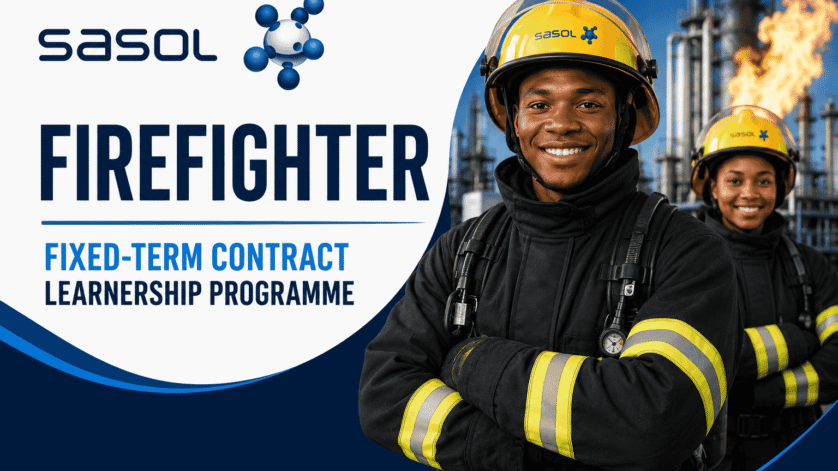
Sasol Fire Fighter Learnership 2026: Complete Guide for Young South Africans Seeking a Career in Emergency Services
Introduction
The demand for skilled emergency response professionals continues to grow across South Africa’s industrial, energy, mining, manufacturing, and public safety sectors. Firefighters play a vital role in protecting lives, property, critical infrastructure, and the environment during emergencies. For young people who are passionate about serving communities and responding to challenging situations, the Sasol Fire Fighter Learnership 2026 presents an excellent opportunity to gain practical experience and industry-relevant training.
This learnership programme offers aspiring firefighters the chance to receive structured learning while gaining valuable workplace exposure within one of South Africa’s leading energy and chemical companies. Through a combination of classroom-based learning and practical training, participants can develop the technical, physical, and professional skills required to succeed in emergency response environments.
This comprehensive guide explains everything prospective applicants need to know about the Sasol Fire Fighter Learnership 2026, including eligibility requirements, training opportunities, career prospects, application guidance, essential firefighting skills, industry demand, and long-term career development opportunities.
Understanding the Importance of Firefighting Careers
Firefighting is much more than extinguishing fires. Modern firefighters serve as highly trained emergency responders who handle a wide range of incidents, including industrial accidents, hazardous material emergencies, rescue operations, disaster response situations, and public safety incidents.
Firefighters are often among the first professionals to arrive at emergency scenes. Their quick actions can save lives, prevent property damage, and minimize environmental risks. Because of this responsibility, firefighting remains one of the most respected professions globally.
South Africa’s growing industrial sector requires trained emergency personnel capable of responding effectively to workplace incidents. Facilities such as power stations, chemical plants, fuel storage facilities, manufacturing plants, and mining operations all depend on emergency response teams to maintain safe operations.
About Sasol
Sasol is a globally recognized integrated chemicals and energy company with operations spanning multiple countries. The company has built a strong reputation for innovation, technological advancement, and skills development.
For many years, Sasol has invested heavily in developing young talent through various educational and workplace training initiatives. These include learnerships, apprenticeships, internships, bursaries, and graduate development programmes designed to equip young South Africans with practical skills and employment opportunities.
The company’s commitment to workforce development has helped thousands of individuals gain valuable industry experience while contributing to South Africa’s economic growth.
Purpose of the Fire Fighter Learnership Programme
The Fire Fighter Learnership Programme is designed to prepare participants for careers within emergency response and safety-related fields. The programme focuses on developing practical competence while exposing learners to real workplace situations.
Participants receive training that covers essential firefighting techniques, safety protocols, emergency response procedures, rescue operations, and workplace readiness skills. The objective is to ensure learners gain both theoretical understanding and practical experience.
The programme helps bridge the gap between education and employment by providing structured workplace learning opportunities that prepare participants for future career success.
Benefits of Participating in a Learnership
One of the greatest advantages of participating in a learnership programme is the opportunity to gain real-world experience while learning.
Benefits may include:
- Workplace exposure
- Industry-specific training
- Practical skills development
- Professional networking opportunities
- Increased employability
- Improved confidence
- Enhanced communication skills
- Teamwork development
- Understanding workplace culture
- Career guidance and mentorship
Many employers value candidates who possess both theoretical knowledge and practical experience, making learnerships an effective stepping stone toward future employment.
Why Emergency Response Skills Matter
Emergency response skills are valuable across numerous industries. Companies continuously seek professionals who can identify hazards, manage risks, and respond effectively during emergencies.
Emergency response personnel contribute to:
- Workplace safety
- Community protection
- Industrial operations
- Disaster preparedness
- Environmental protection
- Public safety initiatives
As industries continue expanding and modernizing, the demand for qualified emergency responders remains strong.
Training Areas Covered During the Learnership
Participants may receive exposure to various training modules designed to develop comprehensive emergency response capabilities.
Fire Prevention
Fire prevention focuses on identifying and eliminating potential fire hazards before incidents occur. Learners gain an understanding of risk assessment, safety inspections, and preventative strategies.
Fire Suppression
Fire suppression training teaches participants how to control and extinguish different types of fires using appropriate equipment and techniques.
Rescue Operations
Rescue training includes methods used to assist individuals trapped or injured during emergency situations.
Hazard Identification
Participants learn how to identify workplace hazards and assess potential risks before they lead to incidents.
Emergency Communication
Effective communication is critical during emergencies. Learners develop skills related to reporting incidents, coordinating responses, and maintaining situational awareness.
Safety Compliance
Training also covers workplace regulations, safety procedures, and industry best practices designed to protect employees and communities.
Physical Fitness and Firefighting
Physical fitness plays a crucial role in firefighting. Emergency responders often work in demanding environments that require strength, endurance, agility, and mental resilience.
Firefighters may be required to:
- Carry heavy equipment
- Climb ladders
- Navigate confined spaces
- Operate rescue tools
- Assist injured individuals
- Work in high-pressure situations
Because of these responsibilities, candidates must demonstrate appropriate fitness levels before entering operational environments.
Psychological Preparedness
In addition to physical strength, firefighters must possess mental resilience.
Emergency situations often involve:
- High stress levels
- Time-sensitive decisions
- Exposure to traumatic incidents
- Complex problem-solving requirements
- Team coordination under pressure
Psychological assessments help determine whether candidates can effectively manage the demands associated with emergency response work.
Essential Skills for Future Firefighters
Successful firefighters often possess a combination of technical and personal qualities.
Important skills include:
Teamwork
Emergency response depends heavily on cooperation and collaboration.
Communication
Clear communication ensures efficient coordination during emergencies.
Discipline
Following procedures and safety standards is essential.
Problem Solving
Firefighters frequently encounter unpredictable situations requiring quick thinking.
Adaptability
Every emergency presents unique challenges that require flexible responses.
Leadership
Leadership skills become increasingly important as firefighters gain experience and responsibility.
Career Opportunities After Completion
Completing a firefighting learnership can open doors to various career paths.
Potential opportunities include:
- Fire Fighter
- Industrial Fire Fighter
- Emergency Response Officer
- Safety Officer
- Risk Management Assistant
- Disaster Management Assistant
- Occupational Health and Safety Representative
- Emergency Services Technician
- Fire Prevention Officer
- Industrial Safety Coordinator
The skills gained through the programme may also support further studies and specialized training opportunities.
Long-Term Career Growth
The emergency services field offers numerous opportunities for advancement. With experience and additional qualifications, professionals may progress into supervisory, management, training, or specialist roles.
Possible advancement opportunities include:
- Senior Fire Fighter
- Station Officer
- Emergency Response Coordinator
- Safety Manager
- Risk Management Specialist
- Disaster Management Practitioner
- Emergency Planning Consultant
Continuous learning remains essential for long-term success within the industry.
Preparing a Strong Application
Applicants should carefully review all requirements before submitting their applications.
Helpful preparation steps include:
- Updating your CV
- Gathering supporting documents
- Reviewing qualification requirements
- Ensuring contact information is accurate
- Preparing for assessments
- Researching the company
- Understanding the role
Attention to detail can significantly improve the quality of an application.
Common Application Mistakes to Avoid
Many applicants reduce their chances of success by making avoidable mistakes.
Examples include:
- Incomplete applications
- Missing documents
- Incorrect information
- Outdated contact details
- Poorly prepared CVs
- Late submissions
Taking time to verify all information before submission can help improve outcomes.
Building a Future in Emergency Services
Emergency services remain among the most rewarding career fields for individuals who enjoy helping others and making a positive impact. Firefighters contribute directly to community safety while developing highly transferable professional skills.
The experience gained through structured workplace learning programmes can provide a strong foundation for long-term career growth and professional development.
Conclusion
The Sasol Fire Fighter Learnership 2026 represents an excellent opportunity for young South Africans who are interested in emergency response, workplace safety, and community protection. Through practical training, structured learning, and workplace exposure, participants can gain valuable skills that support future careers within firefighting and emergency services.
For motivated individuals willing to commit to personal development, physical fitness, teamwork, and professional growth, this learnership can serve as an important stepping stone toward a rewarding and meaningful career. By preparing thoroughly, meeting all requirements, and demonstrating dedication throughout the application process, aspiring firefighters can position themselves for success within one of South Africa’s most respected industries